Interview
John Hiatt: An incredible career
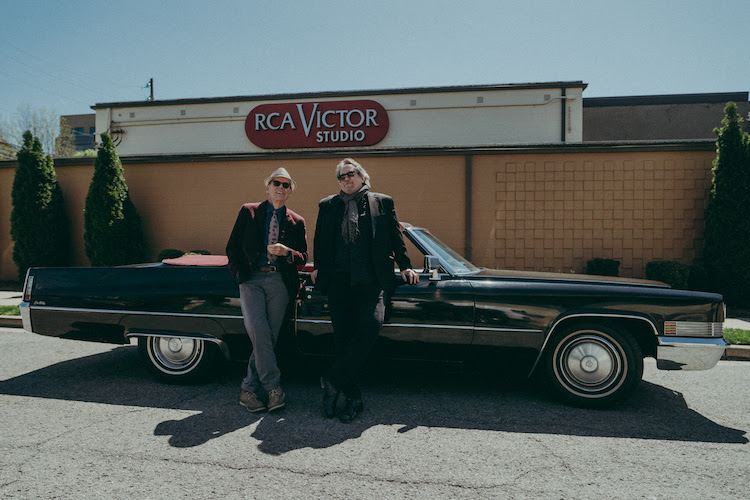
Filmmaker and radio producer Bram van Splunteren had stepped away from music journalism for quite some time, until he heard that John Hiatt (73) would be playing what were likely to be his final European shows this summer. Getting in touch proved a little awkward, but once they were on the phone, his former idol took the time to reflect on his career. “Some days you get the bear and some days the bear gets you.”
Written by Bram van Splunteren
I’ve met John Hiatt several times. The first time was during the filming of the documentary Profession Musician, which I made for the VPRO in 1987. We filmed him during a short tour through Texas, in Austin and Houston. And in Nashville, Tennessee, where he was already living at the time. It would turn out to be the first-ever documentary about Hiatt.
In Nashville, we could hardly believe our luck when Buddy Killen, head of the major music publisher Tree Music, showed us around its vast offices. There, songwriters sat in small rooms packed with instruments, spending their days trying to come up with the next hit for the country market, effectively working a nine-to-five job.
We also met Curly Putman there, who treated us to an acoustic rendition of his best-known song: Green, Green Grass Of Home. A million-seller that kept the tills ringing at Tree Music for years. In the 1970s, Hiatt worked alongside Putman as a staff songwriter, before committing himself fully to a solo career with the release of the album Slug Line in 1979.
At the time, I had only just started at what was then Radio 3, producing De Noenshow, and I fell head over heels for that album straight away. For the first few months, we played something from it almost every week on our alternative prime-time lunchtime show.
The up-tempo numbers Sharon’s Got A Drugstore and You Used To Kiss The Girls, the slow-burning rock ballads Long Night and Take Off Your Uniform (featuring Procol Harum drummer B.J. Wilson), they all got an airing. And, of course, there was the title track, which I was convinced was a hit, as well as the song that, partly thanks to our show, managed to fight its way onto the ‘tipparade’ (the Dutch chart for songs just outside the Top 40): Radio Girl. And I’m almost forgetting Washable Ink, which we played both in Hiatt’s own version and in the tender soul interpretation by The Neville.
For a while I felt like the chairman of the Dutch John Hiatt fan club, and when I got to make a top 10 of the best records of the seventies for the music magazine Oor, I put, very opportunistically, I admit, Slug Line at number three, behind Little Feat’s Dixie Chicken and David Bowie’s Hunky Dory, but ahead of Bruce Springsteen’s Darkness On The Edge Of Town.
And now, 47 years later, here I am on the phone with my former idol. I tell him that I no longer write about music, but that for his possible farewell show in the Netherlands, I’m happy to make an exception, as a tribute to him and to all the wonderful music he has given the world, and me. He’s grateful, he says a little awkwardly, as he always does whenever I slip a little too far into fanboy mode. That’s something I’ve noticed over the years.
“My days are quiet. I’m mostly at home with my wife; now and then we look after the grandkids. My lenses keep falling out of my glasses, so I’ve got to pop down to the optician in a bit. That’s the big event of the day.”
“The essentials in life, that’s what keeps me busy. I’m fine with that. I love the peace and quiet. Every so often I retreat to my little home studio, where I can play and record. I haven’t written much lately, four or five new songs this year. Things are moving a bit slower. But I’m patient. At my age, you have to learn to be patient.”
Have you ever thought about writing your memoirs?
“No, ha ha… I don’t think I’d be doing anyone a favor with that. Maybe I’ll feel differently about it next year. I don’t look back and I don’t look ahead. I try to live in the moment as much as I can, wherever I am. And that’s already a full-time job. With my family, the music, my friends. And trying to stay healthy, physically, mentally and spiritually.”
Is that working out?
“Reasonably. My knees have gotten worse, though. From all those years of standing and playing on stage. We guitarists are constantly off balance during shows. We tap our foot, or move around, and then that guitar hanging around your neck throws you out of balance. So you’re always correcting bad posture. I hear the same thing from other older guitarists. My shoulders are shot and my knees are wrecked. But luckily, I can still move.”
Is it true that your upcoming tour is a farewell tour?
“Well (starts laughing). There are plenty of musicians who say they’re retiring, and then a year later they’re suddenly back again. But I don’t expect to return to Europe anytime soon. So this is my chance, I’ll turn 74 in August, to play some shows and thank the countries and cities that first gave me an ‘audience.’ In the Netherlands I can play a mid-sized venue, and it’s already sold out, which is something that doesn’t happen in my home country. I’m forever grateful for that, of course.”
I’d like to take a quick look back at your music. First of all, what are your five favourite Hiatt songs?
“That’s really hard. It’s like talking about your children. Saying that certain songs are your favorites isn’t fair to the others. And then I’d also have to choose from about a hundred songs I still love to play. And I have favorites for different reasons. Have A Little Faith In Me, for instance, I love for its simplicity. It came in a flash, in five to ten minutes from start to finish. That doesn’t happen to me often. It’s like getting a visit from someone you weren’t expecting and haven’t seen in a long time. And then there’s a song like Nobody Knew His Name (from the album Terms Of My Surrender, BvS), which I’ve started singing again lately. About an old man whose name nobody knows, who keeps turning up at a railroad crossing in the town where he lives, looking for the girlfriend who ran off with a train engineer. He just sits there in his car, waiting, until one day he dies behind the wheel. The story of that song unfolds across several verses and has a certain complexity. That’s what I love about it. I love telling little stories made up of several good elements. Slow Turning I like because it has three chords, the same for the verses as for the chorus. I love that kind of simplicity. A Thing Called Love I love for its message and because Bonnie (Raitt) made such a beautiful cover of it. Crossing Muddy Waters is beautiful in terms of feel…. Those are the five that come to mind right now.”
I thought you might mention The Usual, because Dylan covered it.
“I was honored, of course, but I was that guy in the song: hunched over at the bar, waiting for the next drink, until it was enough, only it never was.”
What matters most to you when you decide to record a song, that the lyrics are good, or the music?
“It’s hard to separate them, because they come into being almost simultaneously. For me the music usually provides the inspiration for the lyrics. The lyrics come from some magical place. I have no idea how it happens, but when it does, it’s a wonderful feeling. To be able to tell a story that stirs emotion in your audience, that’s honest at the very least and, at best, intriguing and entertaining.”
Let’s go all the way back to the beginning. I’m going to read you a few lines from an old song of yours. I’m curious whether you recognize them. I want to give you I want to give you everything / I want to feel your heart sing. After those first lines the tempo drops right down and you sing: All the boats have left the harbour / Sailing on sailing on… They come from a piano song you never recorded. It’s on a cd of obscure demos from your time at Tree Music.
“Oh my God, I was eighteen when I wrote that! I was trying to see whether and how I could, with my limited musical knowledge, tell something that meant something within a three-to-four-minute format. There are songs from that period I still play, like Train To Birmingham, which I wrote at nineteen. And only recorded much later, on… uh, what was that record called again.” (Dirty Jeans And Mudslide Hymns, 2011, BvS)
I was listening again recently to your first two albums, Hangin’ Around The Observatory and Overcoats, from the mid-seventies. They’re so different from your later records. I was wondering who your influences were back then. Randy Newman? Van Dyke Parks?
“Those two for sure, but also Dylan and soul and blues. I was a scared little kid, still figuring things out as an artist, searching and imitating, the way it goes when you’re young and still trying to find yourself. On the principle that if you write enough nonsense, eventually it’ll turn into something, ha ha.”
Some of the songs are even a bit jolly, and there isn’t much blues to be heard on those early records the way there is on your later albums.
“There are a few sad ballads on there, you know, and… blues is just a feeling, it doesn’t always have to be twelve bars and a guitar solo.”
One of those songs is I Want Your Love Inside Of Me, do you still remember that one?
“I was hungry for love. I was eighteen and came to Nashville having never had a girlfriend. A lot was new to me.”
How did that go for you?
“Awkwardly. It took a few years. I also had the handicap of being a drug-addicted alcoholic. It was tough. Like trying to do something with one arm tied behind your back.”
Did you already have those alcohol and drug problems at eighteen?
“I had my first drink when I was eleven. With only one goal: to get as drunk as possible. I never drank one drink or three, I always drank ‘alcoholically.’ Meaning until I passed out.”
Why?
“It’s a disease. The disease of alcoholism. I didn’t choose it, and I don’t know whether it chose me, but I’ve got it. I’ve met hundreds of others who have it too. Some recover, others don’t. It’s not about how much you drink, but what it does to you. I remember it well, I was eleven, in fifth grade, and I went with two friends to a party thrown by some eighth-graders, and we found someone who could buy us half pints of vodka, cherry flavored vodka from the brand Dark Eyes. And we drank it down as fast as we could, because it tasted awful. And I remember clearly feeling instantly ‘transformed.’ Everything I thought I wasn’t before, I became. Suddenly I was a fifty-foot giant and ‘bulletproof.’ And I looked at my friends and saw that they were just drunk, but I was transformed. And that’s the feeling alcoholics keep chasing from their very first drink, many of us to the grave. But I got lucky. I kicked it.”
Did being drunk help you over your shyness and fears?
“Shame, terrors, guilt… all kinds of things were going on in my family. Behind closed doors. There were seven of us kids and we all suffered from it. There was all sorts of hidden abuse, let me just put it that way, and I was painfully aware of it.”
Even at that young age…
“Yep. The only thing I knew was that I had to find a way out of it. Of that family of seven children, two are left. My sister and I. I feel a lot of love and affection for my family, but I had to go through a process to recover from all the pain. However bad the outcome was for some of us, each of us did exactly what we thought was best to do at the time. And often that wasn’t very good at all (Hiatt’s eldest brother took his own life at 22, BvS). As Willie Nelson once said: I did the best I could, no matter how hard I tried.
A few years ago I stole those lines for a song, though the title escapes me right now. I haven’t seen Willie since to tell him.”
You started out at eighteen as a songwriter at the music publisher Tree Music. How did you do?
“Very well. They paid me 25 dollars a week, this was in 1971. Ten dollars went to the rent for the room in the boarding house where I lived. With an old bed with metal springs, a small desk, and a bare light bulb hanging from the ceiling. And then I bought loose tobacco to roll my own cigarettes, the way you Dutch people like to do so much.And with the rest I bought as much beer as I could, the cheapest beer I could get my hands on. And I considered myself very successful. Which I was, because I was getting paid for what I loved doing. That feeling has never left me. That I still can’t believe I get paid for the thing I love most.”
And at a certain point you even had some success.
“At nineteen I went from 25 dollars to 50 dollars a week, and at the end of 1972 I met a couple of guys from the band White Duck. They’d already made a record with MCA, and then two brothers from Texas left the band and they asked me to join. We recorded an album, In Season, on which I sing a couple of songs. My first professional ‘recording.’ And we did some shows too, no real tour. It was 1973, and I thought: wow, so this is show business and I’m in it!”
“Through my manager and friend Travis Rivers, who in San Francisco had hooked Janis Joplin up with Big Brother and the Holding Company, and later in Nashville helped give country rock a boost by getting Tracy Nelson and Mother Earth to record albums, I got an audition at Epic Records in New York. Even though I was writing songs for Tree Music, which mainly focused on country songs, I wasn’t really a country artist myself. So I had to go to New York. After the audition, I got to record a single, We Make Spirit, but it flopped. Then Epic gave me another ten thousand dollars or so to record a new single, and somehow we ended up making a whole album with that budget: Hangin’ Around The Observatory. I’ll always be grateful to Travis for that. I still tell him he should write his memoirs, because if anyone knows where all the bodies are buried in the American pop, rock, blues and country scene of the sixties, seventies, eighties and nineties, it’s him! Ha ha ha. I really hope he does it. He knows all the dirty deeds, all the good and bad, so to speak.”
If you had to pick a favorite from your debut album, which song would you choose?
“Name some titles.”
I read out the titles of all the tracks.
“Yeah, then it’d have to be Sure As I’m Sitting Here. The band Three Dog Night heard the song, recorded it and scored an American and Canadian top 20 hit with it. That gave me the chance to keep writing songs at Tree Music for a few more years.”
And from Slug Line. Do you have a favorite off that record?
“I love the title track. And You Used To Kiss The Girls was fun.”
The next album, Two Bit Monsters, seems to have been made in much the same mood as Slug Line.
“Both those records were really inspired by the English Stiff Records label, Elvis Costello, Nick Lowe, and by bands like the Ramones who went back to the rock ’n’ roll style, to the simplicity that had gone missing somewhere in the seventies. Stiff artists like Wreckless Eric, Ian Dury and Lene Lovich I thought were great too.”
After the much-deservedly praised Slug Line came four uneven albums that really put my fandom to the test. Fine songs like Pink Bedroom, Something Happens, The Usual and When We Ran were overshadowed by mediocre tracks and those ugly eighties synths and drums, with far too much reverb.
There was, however, one side of a record that kept my hopes for better days alive: the Nick Lowe-produced side two of Riding With The King (1983). In the bluesy title track and the beautiful sixties-style soul number Love Like Blood, you could hear a longing for the Black music of his youth.
What are your thoughts on Riding With The King?
“On that one I found a certain groove, with the help of Nick Lowe and his band The Cowboy Outfit. Working with Nick was wonderful. I think that’s where we first began to dig into the music I grew up with, which has always been a guide for me. Blues and soul above all.”
An example?
“The title song. A dirty groove, a little guitar riff. I was crazy about that kind of song when I started making music.”
You and Nick are both such wonderful songwriters.
“Nick is a genius in his field, a brilliant musician, and my absolute favorite bassist. He feels it deep inside, he’s a force.”
On the album that followed, Warming Up The Ice Age, that direction was abandoned. Hiatt once again seemed like a man lost in a desert of musical styles that didn’t fit him. As a fan, I almost gave up on him for good.
But then, in June 1987, out of nowhere came Hiatt’s magnum opus, recorded in just four days: Bring The Family. By then I had joined the VPRO, where we made the radio show De Wilde Wereld. I was also working on a series of pop documentaries for VPRO TV, about hip-hop in New York, Iggy Pop, Nick Cave, Red Hot Chili Peppers, and the music city of Liverpool. One episode still didn’t have a subject. After hearing Bring The Family, I decided to make one episode purely as a fan, and that it had to be about John Hiatt.
Just a few months later, I’m cruising across the vast plains of Texas with cameraman Deen van der Zaken and sound man Bert van den Dungen, in our rented V8 Lincoln Town Car. It wasn’t hard to find shots that perfectly matched songs like Memphis In The Meantime, Alone In The Dark (especially that one!) and Learning How To Love You. It was clearly meant to be.
In the documentary I made about you in 1987, Buddy Killen takes us down to the basement of the Tree Music building and plays us his favorite song of yours on a tape recorder: You Never Told Me You Were Gonna Go. He then says he hopes Willie Nelson will record it one day. The remarkable thing is that he sings along to the lyrics almost word for word.
“Oh gosh.”
People here in the Netherlands who saw the documentary found it baffling that you never recorded that.
“Oh really, wow. Thank you for reminding me. The moment I hang up the phone I’m going to look it up. I’d completely forgotten about that song. For the concert in Rotterdam I’ve dug up a few old songs I’ve never put on record, maybe I’ll do this one too.”
A lot of people also love A Crazy Girl Is Hard To Find. It’s in the film too, and you never recorded that one either. It’s one of my favorite songs. Whenever I had a new girlfriend who wasn’t your typical girl, I’d play it for her.
“You knew what I was talking about, ha ha. It’s a tribute to crazy girls, as in, they’re the best. We men think they’re crazy because we have such limited knowledge of life, and of women in particular.”
That same day, I got an email from management asking me to send them a link to the 1987 documentary. How great would it be if John played at least one of those two songs in Rotterdam.
Around thirty-five minutes into our phone conversation, someone from management interrupts and asks if I can start wrapping things up. John says it’s fine if we continue a little longer. Naturally, there’s no way to cover all of his roughly 25 studio albums, so I quickly bring up a few more of my favorites from the years after the eighties.
Perfectly Good Guitar, from 1993, is a song that goes down well with your fans. Several John Hiatt podcasts are named after it.
“Yeah, here we also call it A Perfectly Gouda Guitar, with a wink to the Dutch fans. And then we picture a big round Gouda cheese with a guitar neck on it.”
My favorite track on that album is Old Habits, anything you can say about that one?
“I got the idea for that song from the singer Marshall Chapman. Did I give her credit for that?”
I look it up right away; on Spotify, yes.
“Good. I feel a little better about myself again, ha ha. She said that during a conversation, talking about how people keep doing the same things over and over and getting the same bad results: ‘Old habits are hard to break.’ I said, ‘No kiddin’.’ I think it’s a good song myself, too.”
And what’s the background of Poor Imitation Of God, a song from The Eclipse Sessions in 2018?
“I was raised Catholic, but I’m no longer practicing. In the Catholic faith there’s the idea that we humans are created in the image of God. Whatever God means to you, there’s something of God in all of us. One day I took a hard look at my life and realized I didn’t come out of it looking very good. Then I said to myself: you’re a pretty poor imitation of God. That’s how it works. Sometimes I hear something or something just occurs to me, and then I write about it.”
At one point you sing: I do better, I do better on my own.
“That’s our human blind spot. That we think we can manage better on our own. Which is absolutely not true.”
Good to hear that you’ve made a kind of peace with yourself about life.
“You know, Bram, it comes and it goes. I have days too when I’m anything but at peace with things. It’s always a work in progress. The road is long, and then you die. And you move on to the next road. I do my best. Some days you get the bear and some days the bear gets you.”
What do those difficult days look like, then?
“Depends, I’m only human too. My biggest challenge, the one I have to deal with every day, is the thoughts in my own head. Beyond that there isn’t much I have any control over.”
But you do put that to good use in your songs, right?
“Oh, definitely. If you think good thoughts, good things can come from that. But when I think about walls and drop-offs and the next bomb going off, things don’t look so good. Unfortunately, I usually expect the worst.”
That sounds a little like hypochondria.
“No, hypochondriac refers to something physical. You could call it hypochondria of the mind, ha ha ha. Sorry for laughing about it, but when someone puts my life under a microscope, I sometimes see how funny it is myself. I mean, when I think about my career, I think: it’s impossible that I’ve had this wonderful musical career. Maybe modest by some standards, sure, but I still can’t believe this happened to me. And that it’s still happening to me. It’s a source of joy, truly.”
Special thanks to Linda Bogaerts.
John Hiatt Live: 29 June and 6 July at De Doelen, Rotterdam